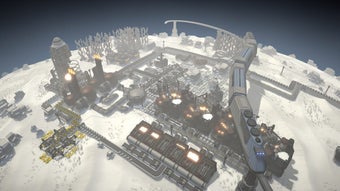
Interplanetary factory simulation that mixes automation with tactical fleet warfare
Start on a single production line and expand across planets using planning tools, logistics, and defence: Iron Inc. places factory optimisation and planetary security at the centre of play. Segment Games designed the Windows simulation for players who value deep automation systems and strategic combat, and the game highlights research progression, blueprinting, and fleet logistics as the primary ways to grow an industrial empire. The title fits experienced builders seeking long-term systems challenges.
What kind of game places industrial planning and territorial risk together?
Iron Inc. combines factory simulation and real-time strategy into a continuous loop where you build production lines, research new tech, and keep supply chains open between colonies. The core loop asks you to expand from a starter line into multi-planet operations, with logistics that move solids, liquids, and gases and a blueprinting system that copies and shares complex layouts. That pairing makes optimisation as important as maintaining territorial access to resources.
Does it support cooperative and conflict-driven play?
The game supports online co-operative play, letting multiple people design and manage a single industrial network while also handling space-based fleet actions. Space fleets require fuel and ammunition to run supply lines, and planetary bases face ground assaults from hostile creatures, so cooperative teams divide labour between building and defending. Multiplayer alters priorities, since supply convoys and fleet logistics create shared responsibilities beyond individual factory throughput.
How steep is the learning curve and how does progression feel?
The progression relies on an extensive research tree to unlock buildings and infrastructure, and a ghost-marking system that lets you plan before committing resources. Because logistics include elevated belts, splitters, and multi-layer piping, early play focuses on solving throughput bottlenecks rather than cosmetic expansion. Expect a learning curve that rewards methodical problem solving and pre-planning rather than quick, ad-hoc layouts.
What keeps players returning and how does it compare to similar titles?
Interplanetary scale and the ability to run a single save across hundreds of planets provide long-term goals that encourage optimisation over many sessions. The integration of fleet logistics sets it apart from factory-only titles by adding strategic supply management on a galactic map. Fans of detailed automation who enjoyed titles such as Factorio or Dyson Sphere Program will find familiar systems extended with tactical layers and persistent expansion goals.
Iron Inc. rewards sustained commitment from systems-focused players
Iron Inc. is a demanding choice for players comfortable with detailed planning and multi-layered logistics; the game asks for long-term commitment to scale across many planets. Casual, short sessions are less likely to reach the operational complexity the design targets. For builders who enjoy extended optimisation and shared multiplayer responsibilities, the game offers a deep sandbox that pays off as networks mature.